1300 786 560
 Australia
Australia
Australia
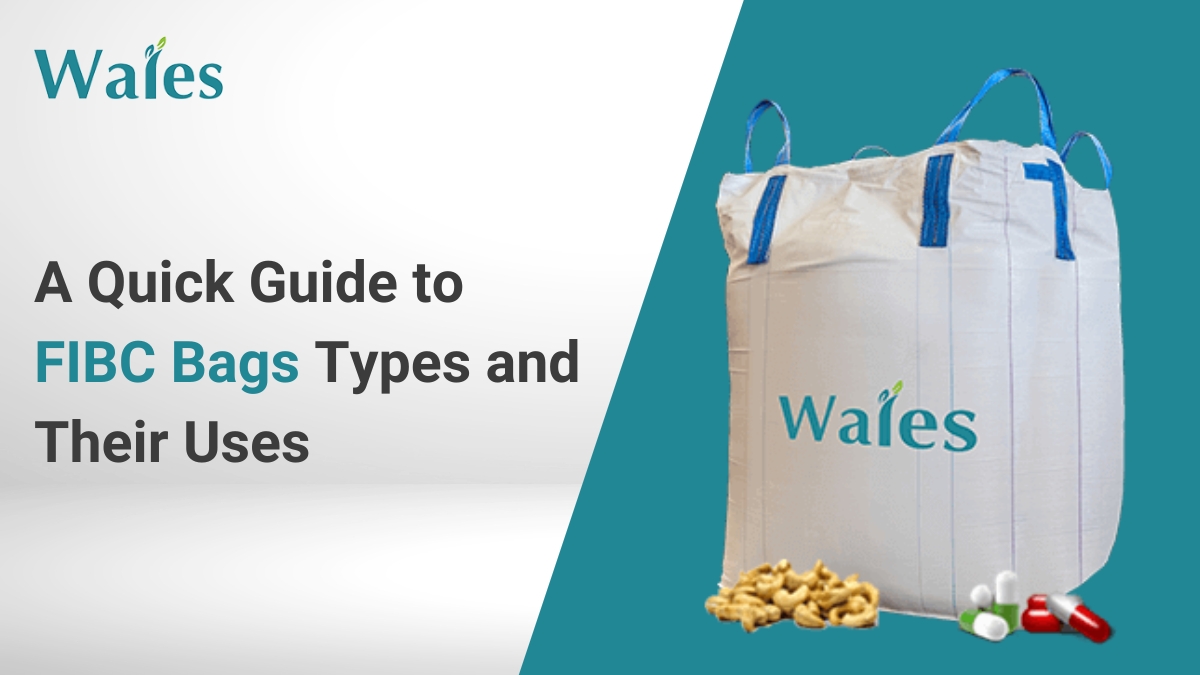
FIBC Bags – known as Flexible Intermediate Bulk Container or bulk bags are the default quick fix to many businesses in bulk packaging. FIBC bags are suitable for a plethora of industries, ranging from agriculture, construction, fertilisers, and chemicals; they provide a flexible, efficient, and economical method of transporting and storing dry, flowable materials in large amounts.
In this guide, we’ll investigate what FIBC bags are, dig into the distinctive types available, and examine their unique uses across businesses.
FIBC Bags are industrial-grade containers made from woven polypropylene fabric. Designed to carry loads regularly ranging from 500 kg to 2000 kg, these bags are utilized for the capacity and transportation of dry, granulated, or powdered materials such as grains, sand, cement, fertilizers, and plastic granules.
The offer of FIBC packs lies in their:
From farms storing stock feed to factories shipping chemicals, an FIBC bag is built for the job.
FIBC bags are not a one-size-fits-all solution. Their structure and design vary based on the fabric, weight, and handling necessities. Let’s break down the most commonly used types.
Design: Made from three panels—one for the bottom and two forming the sides—these bags offer improved shape retention when filled.
Use: Popular in agriculture and construction, perfect for packaging grains, seeds, fertilizers, or sand.
Advantages: Economical, steady when filled, great stackability
Design: Constructed employing a single tube of texture, which forms the sides, with a separate top and bottom.
Use: Ideal for fine powders and materials that require superior sift-resistance. FIBC bags are traditionally used in the food and chemical industries.
Advantages: No side seams = less spillage, ideal for light to medium-density materials
Design: Internal baffles (fabric pieces) sewn into the bag to prevent bulging while being filled, and giving the bag a square shape.
Use: Perfect for storing and transporting items like starch, flour, and sugar powders where optimal stacking and space usage are key.
Advantages: Maximum space utilization, neat palletization, decreased transportation costs
Design: These bags have one or two lifting loops stitched into the body fabric and are frequently handled using hooks or forklifts.
Use: Commonly used in agriculture for the storage of seeds, feed, and fertilizer. Also seen in mining and cement industries.
Advantages: Cost-effective, suitable for one use and bulk loading, cranes and hooks can easily handle
Design: 4 corner loops allow for stable lifting from all sides.
Use: These are the most widely used FIBC bags, and are suitable for almost any size dry bulk material handling application – food grains, plastic resins, and minerals.
Advantages: Versatile and durable, can be handled with forklifts, and can be reused in some cases.
Design: Conductive threads woven into the bag, grounded to limit static buildup.
Use: Perfect for transporting combustible powders or working in hazardous situations.
Advantages: Static control, Enhanced security for hazardous products
Design: Made from antistatic fabric that prevents sparks without grounding.
Use: Utilized in businesses dealing with combustible materials or dust, such as fertilisers or powdered chemicals.
Advantages: No grounding needed, works great in explosive environments.
Design: Manufactured and tested to UN standards, used for shipping dangerous goods.
Use: Used by chemical companies, defense, and hazardous waste companies.
Advantages: UN labeling ensures international transport compliance, high security, and execution measures
Design: Made with breathable fabric strips for air circulation.
Use: Commonly utilized for agricultural items like potatoes, onions, or firewood that require airflow.
Advantages: Prevents mold or deterioration, improves product shelf life
Let’s look at how specific industries utilize these bags:
Bulk handling is critical in agriculture. Farmers and agribusinesses use FIBC Bags to package, store, and transport grains, pulses, seeds, animal feed, and fertilizers. Ventilated FIBC Bags are utilized for perishable products like potatoes, onions, garlic, and wood.
The construction industry depends intensely on robust packaging for materials like sand, gravel, cement, bricks, and crushed stone. U-Panel Bags and 4 Loop FIBC Bags are notable in rough handling on construction sites.
For businesses where hygiene and contamination control are essential, FIBC Bags with liners, Q Bags (Baffle Bags), and Type D FIBC Bags are often all found. The inclusion of food-grade liners ensures a barrier against oxygen, dampness, and dust particles.
Dangerous and flammable materials require high-performance control. UN Certified FIBC Bags, Conductive Bags (Type C), and Antistatic Type D Bags are broadly utilized for packaging and transporting chemical powders, hazardous minerals, and fine metals.
Municipal and industrial waste is another major use of FIBC Dumpster Bags. These bags are used to collect, segregate, and transport recyclables, construction waste, and hazardous waste.
There are many key advantages to using FIBC Bags that make them non-negotiable for modern packaging and logistics functions:
Whether you’re storing perishable produce or hauling hazardous materials, trust that there is an FIBC Bag made to fit your specifications. There is a different kind of FIBC Bag that will work, whether it is a 1 & 2 Loop FIBC Bag, UN-certified FIBC Bags, Q Bags, or Conductive Bags that ensure safe, efficient, and customized specifically to your needs.
By knowing the types and uses of FIBC bags, businesses are sure to make good purchasing decisions that will increase optimization, lower waste, and ensure safety compliance.
At Wales Industries, we produce high-grade FIBC Bags for many applications. We have ventilated bags, UN-certified bags, loop style bags, and customized options that are engineered for mission-specific execution, ruggedness, and safety.
Contact Wales Industries today to learn more about your bulk packaging needs and get a quote that is specific to your industry!
Australia
 中国 (China)