1300 786 560
 Australia
Australia
Australia
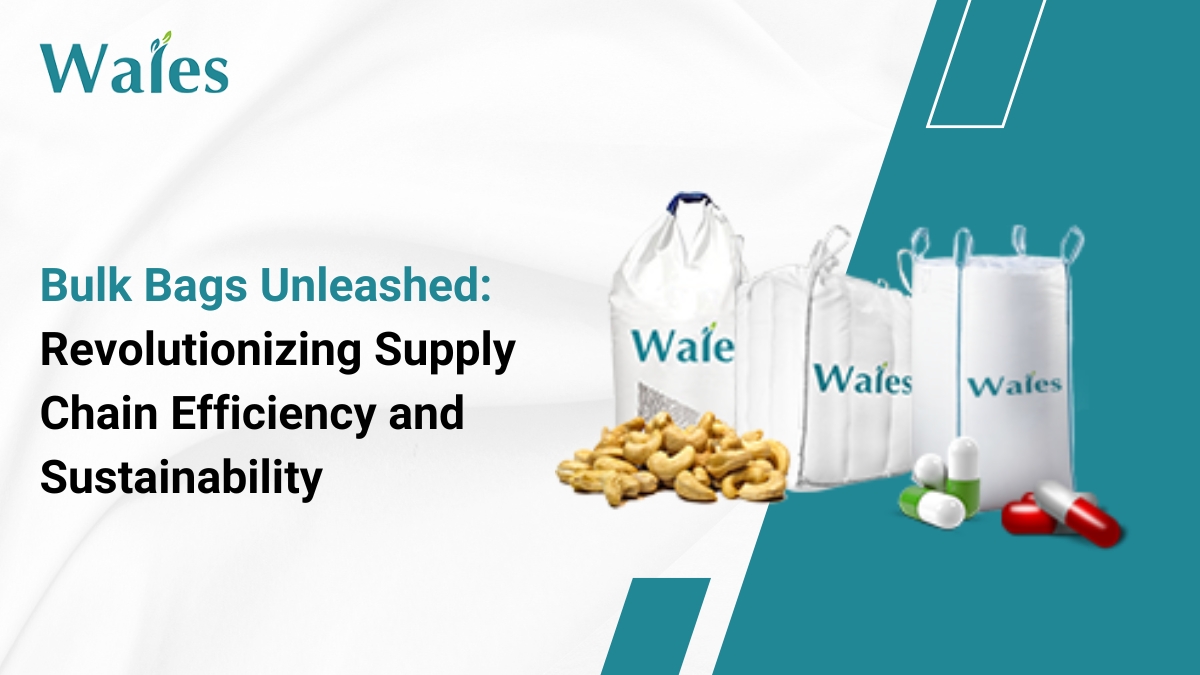
In today’s environmentally-conscious world of global trade and shifting logistics demands, organizations are always looking for more intelligent packaging and transportation options. Bulk bag, or FIBC (Flexible Intermediate Bulk Container), is the ultimate solution for companies dealing with dry bulk materials. These industrial containers are changing the game for how organizations achieve operational excellence while adhering to sustainability.
Tough enough to handle the range of products found in agriculture and food processing to chemicals, construction, etc., bulk bags are a valuable asset when specific needs are to store and ship bulk plants safely, sustainably, and cost-effectively.
In this blog, we will discuss the transformative benefits of bulk bags, their utility in improving supply chain performance, and reflect upon their use in light of current sustainability goals.
They are large-capacity, durable containers made of woven polypropylene or similar polymer material. They are designed for handling and storing dry flowable products, whether it is grains, powders, pellets, or chemicals; one bag can carry between 500 kg and 2000 kg of materials.
Their strength-to-weight ratio, lightweight design, and versatility have made bulk bags the packaging solution of choice for many industrial companies worldwide.
One of the main benefits of FIBC bulk bags is that they can handle heavy loads while staying light. This helps reduce overall weight during shipping, especially when transporting goods over long distances or in large quantities.
Baffle bags or Q-bags will remain square when being filled, allowing easy stacking and storage in warehouses and shipping containers. This will maximise your pallet space, less shipping volume, therefore less all-logistics costs.
FIBC bulk bags are made in a variety of loop configurations, 1-loop, 2-loop, and 4-loop, and are designed for specific handling equipment, forks, cranes, and hoists. Options in handling mean faster loading and unloading, utilising your labour for a maximum return, and lower labour costs.
Bulk bags can have spout tops for easy filling, spout bottoms for emptying, and can be bottom spouts with top spouts, or FIBCs that are linear integrated for moisture-sensitive or high-value products. Custom designs in bulk bags to fit easily into your operations promote efficiency by reducing product loss or risk of contamination.
Unlike single-use packaging, bulk bags provide a reusable and recyclable alternative. Bulk bags, if mapped with the correct care, have physical durability to be reused multiple times, which greatly decreases the amount of waste from packaging.
There are eco-friendly, bulk bag manufacturers that produce sustainable FIBCs using recycled polypropylene or from sustainable sources, and even some take it a step further by producing rPET-based bulk bags made from recycled PET bottles, contributing to the concept of circular economy.
Bulk bags are better for the environment by helping to reduce fossil fuels and carbon emissions in the supply chain when they: reduce the volume of package sizes, reduce material waste, and better use of space during transportation.
Industry |
Bulk Bag Use Cases |
| Agriculture | Storage and transport of seeds, grains, fertilizers, or feed |
| Chemicals | Containment for fine powders, resins, pigments, and catalysts |
| Construction | Handling cement, sand, gravel, and construction debris |
| Food | Packaging flour, sugar, rice, and dry food products with liners |
| Recycling | Collection and sorting of scrap plastic, metals, and glass |
Parameter |
Bulk Bags (FIBCs) |
Traditional Packaging (Sacks, Drums) |
| Load Capacity | Up to 2000 kg | 25–50 kg |
| Reusability | High | Low |
| Space Efficiency | Excellent (stackable) | Limited |
| Environmental Impact | Low (recyclable, reusable) | High (single-use, more waste) |
| Customization | Fully customizable | Limited |
| Labour Cost | Lower (easy to handle) | Higher (more units) |
This table illustrates how bulk bags generate better ROI and eco-efficiency than traditional methods of transporting bulk goods.
Many FIBC bags pass UN tests for the shipping of hazardous material. Others offer Type C or D bags, which are appropriate for flammable environments and where electrostatic discharge must be managed.
They also offer safety labels, tamper-proof closures, food grade liners, and static control materials for other specialty applications, so that supply chain processes conform product safety and quality regulations globally.
Built-in loops and discharge options on bulk bags mean quicker loading/discharging and also eliminate much of the manual activity.
When custom-printed for branding, bulk bags streamline labeling, profiling products, as well as batch tracking, all of which support inventory management and logistics.
FIBC bags are compatible with containerized shipping and intermodal transport, making it easy to implement into a distribution system anywhere in the world.
From small producers to large-scale industry, bulk bags are scalable packaging solutions. Whether it’s 50 units or 5000, businesses can meet demand without drastically changing infrastructure.
Corporations are under pressure to adopt ESG (Environmental, Social, and Governance) benchmarks on sustainability, and many companies are investing in sustainable packaging as part of this mission. Bulk bags contribute to this in many ways, for example:
Emerging technologies, including smart tracking tags, AI-driven inventory system technology, and reusable bag programs, will continue to unlock bulk bags’ potential in supply chains that are future-ready.
The technology for sustainable, scalable, and efficient logistics is here, and bulk bags are at the top of that pile. With incredible versatility, durability, and eco-friendly attributes, bulk bags provide an incredible advantage to any company that wants to work sustainably and more efficiently.
Whether bulk product handling is done in agriculture, construction, or food, making the switch to bulk bags is not simply an upgrade to your packaging, but a business strategy.
Wales Industries offers high-quality FIBC bulk bags that can be configured to suit your industry’s needs. Our compliant, environmentally friendly, and customizable logistics bags help companies across Australia become more sustainable and efficient in their supply chain.
Get in touch with Wales Industries today and let us know your needs, and discuss smarter packaging for your sustainable development.
Australia
 中国 (China)