1300 786 560
 Australia
Australia
Australia
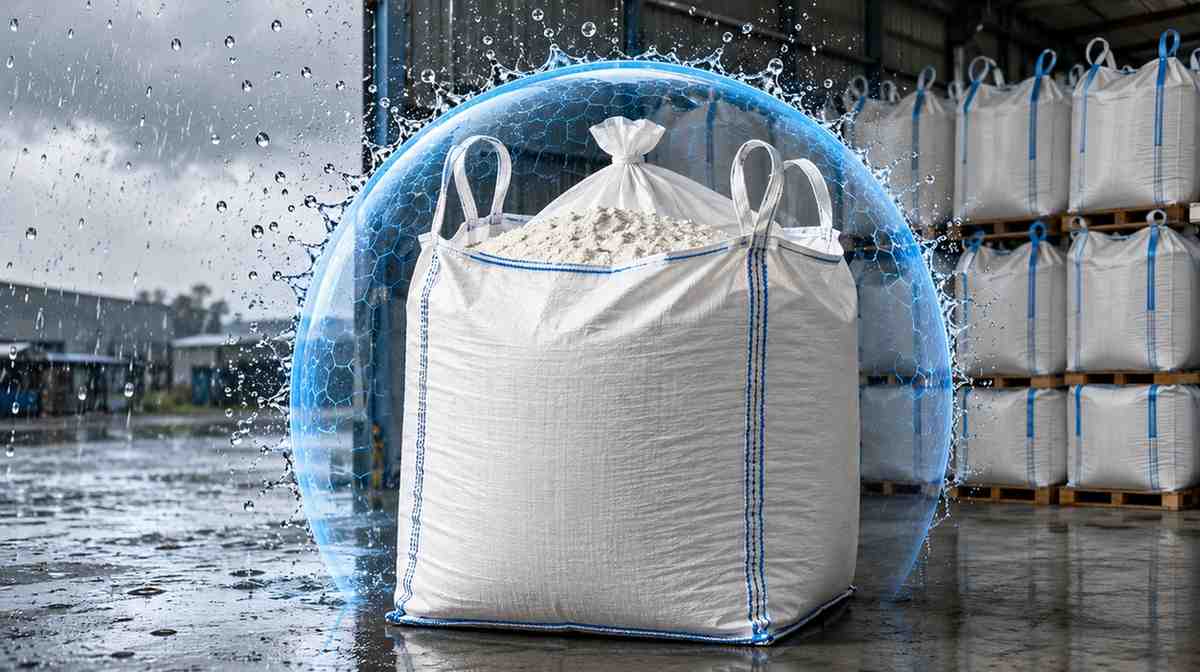
Moisture is one of the biggest risks in bulk packaging, and it often goes unnoticed until the damage is done. A damp wharf, a sweating shipping container, or an unexpected downpour during loading can be enough to spoil an entire batch of powder, granules, or chemical feedstock.
For businesses handling bulk materials, this isn’t just an inconvenience; it can affect product quality, compliance, and cost.
That’s why more Australian businesses are choosing water-resistant FIBC bags over standard bulk bags. This guide explains how they work and where they make the biggest difference, so you can choose the right packaging for your materials.
Standard woven polypropylene fabric is strong, but it isn’t naturally waterproof. Rain, humidity, and even ground moisture can pass through the weave over time. When that happens, the effects are manifest in ways that are difficult to reverse:
Some exposure to moisture may be tolerated for low-value bulk goods. It is not usually for pharmaceuticals, speciality chemicals, fine minerals and electronic grade materials. Even a small amount of trapped humidity can affect purity, particle size, or chemical stability.
There’s no single fix. Water resistance in a bulk bag usually comes from a combination of fabric treatment, liner choice, and how the bag is stitched together.
A thin layer of polyethylene laminate is applied to the woven polypropylene during manufacturing. This closes the tiny gaps in the weave that would otherwise let moisture through, without adding much weight to the bag.
For materials that can’t tolerate any moisture at all, a separate polyethylene (or in some cases aluminium) liner sits inside the outer bag. Liners come in a few forms:
Standard sewn seams leave small needle holes that water can travel through under pressure. Heat-sealed or taped seams close this gap and are typically used on bags built specifically for moisture-sensitive cargo.
Duffle tops, spouted tops, and flat bottoms all behave differently in wet conditions. The right combination depends on how the bag will be filled, stacked, and transported.
Some sectors simply can’t risk a wet bag reaching the warehouse. A few examples:
Across all these sectors, the cost of a single damaged shipment can outweigh what businesses spend on proper packaging for years. Choosing the right level of water resistance upfront is a small decision that protects a much bigger investment.
This is one of the most common questions buyers ask, and the answer depends on the material and the journey it’s taking.
It’s also worth checking humidity levels and transit times before deciding. A bag that performs well on a short domestic run might not hold up over weeks at sea.
At Wales Industries, we work with businesses across chemical, food, pharmaceuticals, minerals, and industrial manufacturing to specify FIBC bags that match the actual conditions their materials will face.
That means:
Since 2016, we’ve supplied bulk packaging to businesses across Australia and beyond, with full manufacturing capability and quality control at every stage. If moisture is a risk your business can’t afford to take, our team can help you choose or design a bulk bag built for it.
Get in touch with Wales Industries to talk through the right water-resistant FIBC solution for your materials.
Moisture might seem like a minor detail in bulk packaging, but the cost of getting it wrong is rarely minor. Whether it’s a batch of cement that hardens, a chemical powder that reacts, or a food product that spoils, the damage is often discovered too late to fix.
Choosing the right combination of coating, liner, and seam type from the start is a simple way to protect both product quality and business reputation.
If your business handles moisture-sensitive materials, it’s worth reviewing your current packaging before your next shipment, not after a problem occurs. Wales Industries can help you specify the right water-resistant FIBC bag for your product, your transit conditions, and your budget, so your materials arrive in the same condition they left in.
Australia
 中国 (China)