1300 786 560
 Australia
Australia
Australia
Sydney runs on bulk goods. Grain leaves the docks, cement moves through hardware yards, and mining and agricultural products travel from regional New South Wales into the city and back out again. All of that movement needs packaging that can handle rough handling, long transport routes, and heavy loads without failing.
For businesses buying wholesale packaging, the choice isn’t just about price. It’s about strength, safety compliance, and whether the supplier can actually deliver on time. Below is a plain-language look at what Sydney businesses should know before they choose a bulk packaging supplier.
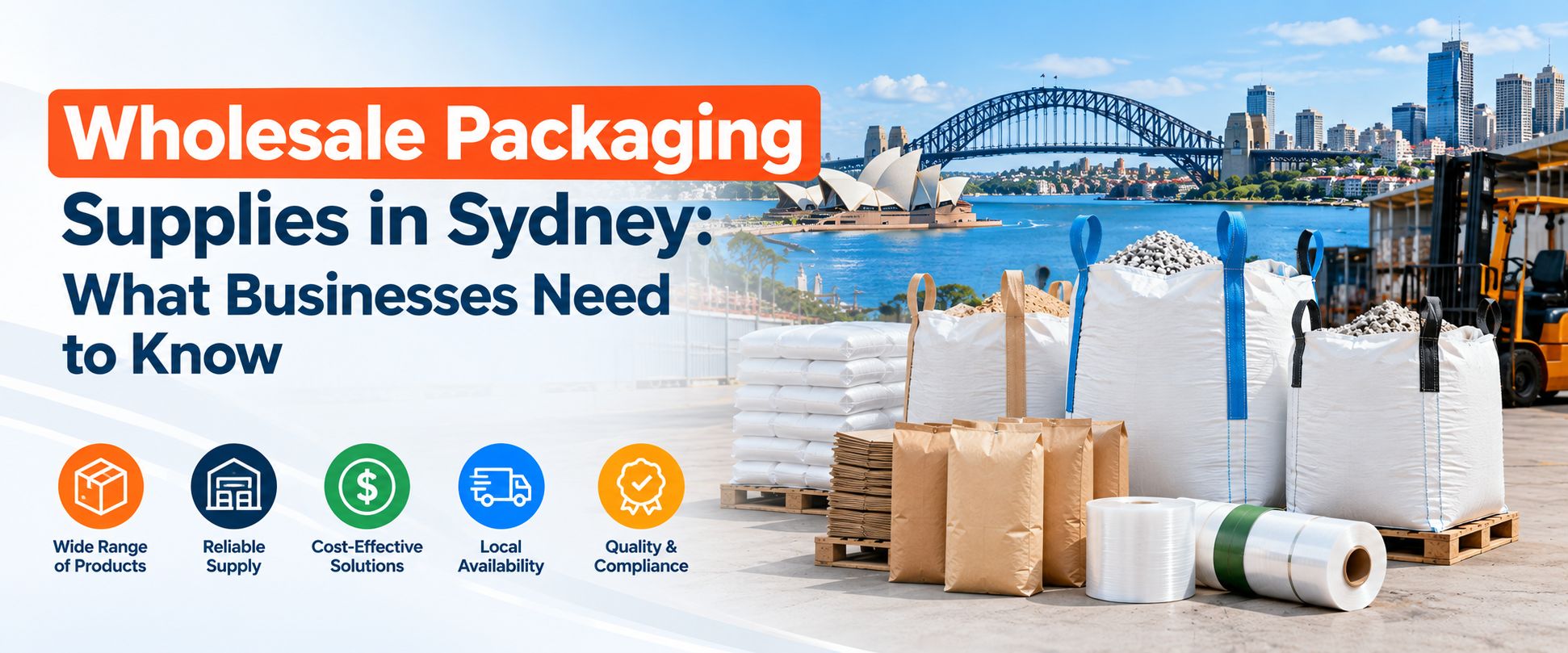
Wholesale packaging covers the bags, sacks, and liners used to move dry bulk products in large volumes. The main types include:
Each type suits a different job. A business moving fertiliser needs something different from one packing onions for a fresh produce market.
Bulk packaging has to survive more than one handling step. It gets filled, stacked, loaded onto trucks, shipped, and unloaded again, often more than once. If a bag fails partway through that journey, the business loses product, time, and money.
This matters even more for industries with strict handling rules. Wales Industries supplies bulk bags used across chemical, pharmaceutical, food, mining, construction, fertiliser, and agricultural sectors, each with its own demands for strength, cleanliness, or safety.
An FIBC bag, also called a bulk bag or big bag, is designed for large volumes, often 500kg to 1.5 tonnes, and is lifted by loops on top. A woven sack is smaller and lighter, better suited to products like grain, feed, cement, or sand that are handled in smaller units.
For dangerous goods, yes. Bags used to transport hazardous materials need to meet UN testing requirements. For food-grade use, packaging needs to meet food safety standards covering material quality and contact safety.
Yes. Suppliers that manufacture their own bags can typically adjust size, loop type, ventilation, and other features to match a specific job, rather than forcing a business into a one-size-fits-all bag.
Businesses unsure which configuration suits their application can also review this guide to choosing the right FIBC type.
Not every packaging supplier tests to the same standard. Before buying wholesale, it’s worth checking what standards a supplier’s bags are actually built to. Wales Industries manufactures FIBC bags tested against the following:
| Standard | What It Covers |
|---|---|
| ISO 21898 | International FIBC standard for non-hazardous goods |
| ISO 13934-1 | Tensile strength of fabric and tape |
| ISO 9001 | Quality management systems |
| AS 3668-1989 | Australian standard for flexible bulk containers for non-dangerous goods |
| EC 94/62 | European Packaging and Packaging Waste Directive |
| ADR/RID/IMDG-Code | Requirements for transporting dangerous goods by road, rail, or sea |
| BRC-S&D | Food safety standard for storage and distribution |
| ISO 22000 | Food safety standard across the food supply chain, including HACCP |
| EC 1935/2004, EU 10/2011, EC 2023/2006, EC 282/2008 | European regulations covering food-contact packaging materials |
| IEC 61340 | Testing standard for static-protective conductive FIBCs |
Bags are also put through physical testing before they leave the factory, including yarn and fabric tensile tests, UV resistance testing, drop tests, stacking tests, topple tests, and grounding tests for conductive bags. This kind of testing is what separates packaging that holds up under real freight conditions from packaging that looks fine on paper.
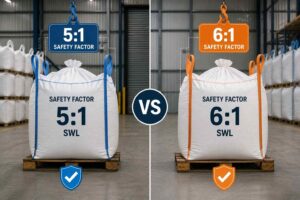
For buyers comparing load ratings, the guide to 5:1 and 6:1 FIBC safety factors provides more detail on how these ratings affect bag selection.
Different industries need different features. Here’s a quick guide:
For agricultural products where moisture and airflow are important, this article on the benefits of ventilated bulk bags explains how ventilation can support storage and transport.
A packaging supplier can make an excellent bag, but if it can’t deliver on time, that quality doesn’t help a business meet its own deadlines. Wales Industries has been manufacturing FIBC bulk bags and paper bags in Australia since 2016, and now supplies over 50 types of FIBCs, with products shipped same day from warehouses across the country.
The company also has production and R&D sites in six locations across Asia and operates four sales and service locations across the Asia-Pacific region, supporting a supply network that regularly reaches 20 countries.
Wales Industries currently supplies businesses across Australia, including customers in Sydney and New South Wales, along with Melbourne, Brisbane, Perth, Adelaide, and Hobart.
Buying wholesale packaging supplies in Sydney comes down to three things: choosing the right bag type for the product, checking the supplier’s tests to recognised standards, and confirming they can actually deliver on schedule.
Whether the job calls for FIBC bulk bags, woven sacks, paper bags, mesh bags, or dumpster bags, matching the packaging to the product and the handling conditions protects both the goods and the bottom line.
Need packaging advice or a quote? Wales Industries’ team can help you choose the right bulk bag or custom packaging solution for your industry.
Australia
 中国 (China)