1300 786 560
 Australia
Australia
Australia
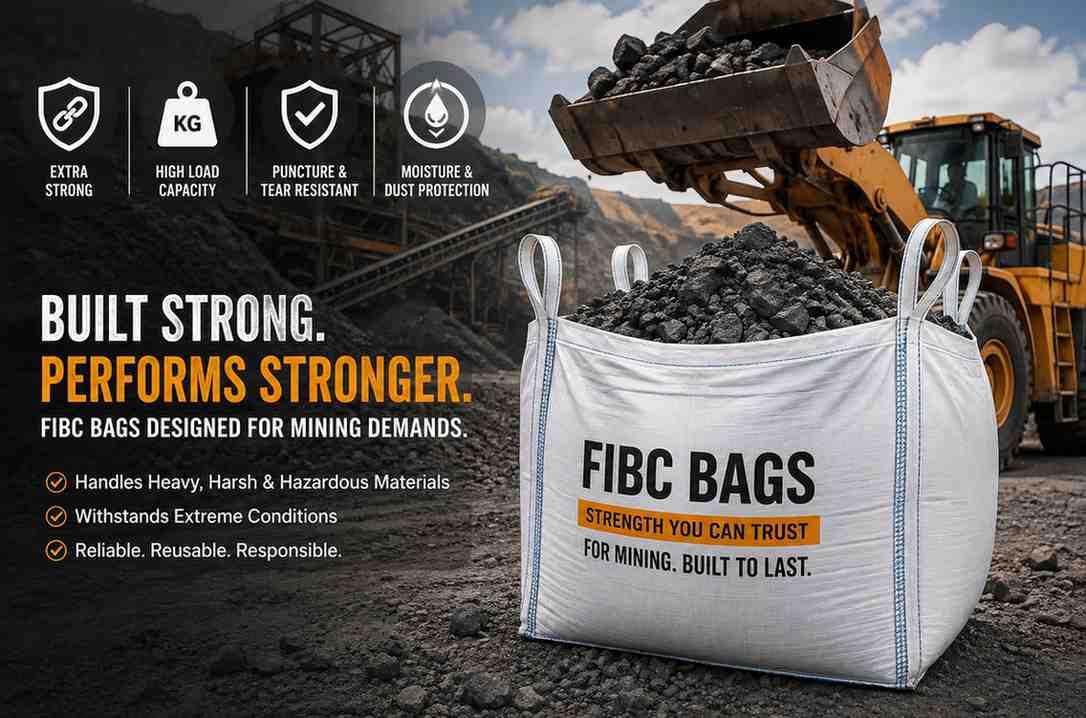
Mining and ore handling place significant demands on packaging. Materials are heavy, abrasive, and often sharp-edged, and loads are routinely dragged, stacked, and transported across rough terrain. A bag that fails during a lift creates more than a spillage problem.
It introduces a genuine safety risk and can bring operations to a halt. For this reason, mine operators across Australia rely on FIBC bulk bags engineered specifically for high-load, high-abrasion environments.
This guide explains why FIBC bags perform reliably in mining and ore applications, which features matter most on site, and how to select the right bag for your operation.
FIBC stands for Flexible Intermediate Bulk Container. Most people just call them bulk bags or big bags. They’re large woven polypropylene sacks used to store, move, and ship dry bulk materials in quantities from a few hundred kilograms up to around two tonnes.
For mining and ore, that means:
Instead of loose loading or rigid drums, one bag can carry a full pallet load, be lifted by forklift or crane, and moved straight onto a truck.
Mine sites don’t offer gentle handling. Bags get filled with sharp, heavy ore, stacked two or three high, and moved across rough, uneven ground. A weak seam or thin fabric will show its limits fast.
The main pressures a mining FIBC has to survive include:
A bag that isn’t built for this environment risks tearing, spillage, and product loss. There is also the added safety risk of a load shifting or dropping during a lift.
Not every bulk bag is suited to mining conditions. The ones that hold up share a few key traits. Here are some features that make FIBC bags fit for mining and ore:
A bag’s durability should never be taken on claim alone. It needs to be proven. Reputable manufacturers put bulk bags through a series of physical tests before they ever reach a mine site, including:
Bags used for hazardous ore by-products may also need UN certification, which confirms they meet international requirements for transporting dangerous goods by road, rail, or sea.
Wales Industries has been manufacturing FIBC bulk bags in Australia since 2016, supplying mining, construction, and mineral processing businesses with packaging built to handle heavy, abrasive materials.
A few things set their approach apart:
The company also offers custom sizing, fabric weight, loop configuration, and discharge spout options, so mining and quarrying businesses aren’t stuck choosing between a bag that’s too light-duty or one that’s oversized for the job.
A few questions can help narrow down the right FIBC for an ore or mining application:
Getting these details right before ordering avoids costly problems later, such as torn bags, spilled loads, or packaging that doesn’t meet transport regulations.
Mining and ore operations cannot afford packaging that fails under pressure. The right FIBC bag protects the load, protects the people handling it, and keeps operations moving without unplanned delays. Fabric strength, lifting design, and testing standards all play a part in whether a bag holds up on site or becomes a liability.
Working with a manufacturing company aware of all these needs makes the task much easier. The Wales Industries Company has more than ten years of experience providing mining, mineral, and construction companies with FIBC bags that are suitable for use in tough situations.
Wales Industries produces bags that are proven to be reliable, have all necessary certificates, and can even customize the bags according to the needs of the company.
The Wales Industries Company provides heavy-duty FIBC bulk bags for mining, mineral, and construction companies in Australia. If you need assistance choosing a bag for your company, feel free to contact us.
Australia
 中国 (China)