1300 786 560
 Australia
Australia
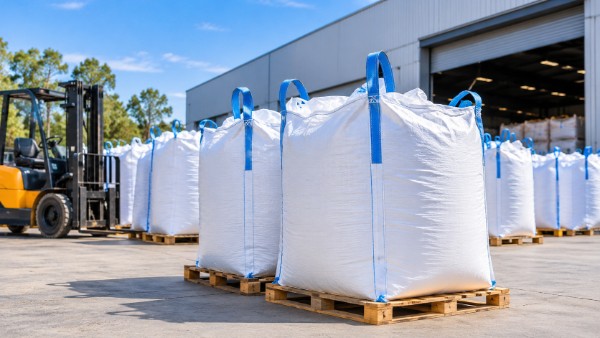
Grain, cement, fertiliser, minerals and chemicals have one thing in common. They move in huge amounts, and many of them travel in large woven bags instead of small sacks. These bags are called FIBCs, short for Flexible Intermediate Bulk Containers. You will also hear them called bulk bags or big bags. They are made from woven polypropylene and are built to store and move dry bulk materials.
A bulk bag looks simple, but it has a big job. It carries the load, protects the product, and has to survive lifting, stacking, and emptying. A weak bag can mean spills, damaged stock, or a failed compliance check. That is why the manufacturer you pick matters as much as the bag itself.
FIBC bulk bags handle dry bulk materials in many sectors. Wales Industries Australia, which has made and supplied bulk bags since 2016, lists these industries on its website:
Each of these has different needs. A food business cares about food-contact rules. A chemical business may need bags for dangerous goods. A farm may only want a strong, low-cost bag. Your first step is to be clear about what you are packing.
Price matters, but it should not be the only measure. Here are the areas worth checking before you place an order.
One bag style does not suit every job. A good supplier should offer several designs and help you match the right one to your product. Wales Industries lists these FIBC types:
The company also supplies container liners, PP woven sacks, BOPP bags, multi-wall paper bags, mesh bags, and skip bags. If you buy several packaging types, one supplier can simplify your orders.
Ask a manufacturer how it tests its bags. Wales Industries says it carries out detailed product tests in its own in-house laboratory. Its website lists these tests:
The list covers material strength, lifting, stacking, and electrical safety. That range is a useful benchmark when you compare suppliers.
Standards tell you what a bag has been made to meet. The Wales Industries quality page groups them by use. It also says the company takes steps to make sure its products comply with mandatory legal requirements and industry standards.
General standards listed:
Dangerous goods (UN bags): ADR/RID/IMDG-Code, which covers the transport of hazardous goods by road, rail, or sea.
Food-grade bags: BRC-S&D, ISO 22000, EC 1935/2004, EU 10/2011, EC 2023/2006 and EC 282/2008.
Static protective bags: IEC 61340, which covers testing methods for electrostatic FIBCs.
If your product is food or a hazardous chemical, ask any supplier which of these apply to your bag.
Many businesses need more than a standard bag. Wales Industries says its bags can be tailored by size, design and special features. It also says solutions are matched to load capacity, material type and compliance needs.
One customer in Geelong, Victoria, shared a useful story on the company’s site. He sent the same bag specification to three companies. Only Wales had a sample made and tested. Asking a supplier to prove a bag works before a full order is a smart habit.
Lead time can make or break a project. Wales Industries says it holds over 50 types of FIBCs in stock and ships the same day from warehouses across Australia. It also lists customers in Sydney, Melbourne, Brisbane, North Queensland, Perth, Adelaide and Hobart. The company looks after both Australia and New Zealand.
A supplier’s track record helps you judge risk. Here is what Wales Industries reports:
Know your material and how heavy each load will be.
Choosing a bulk bag manufacturer is about more than price. The right partner offers a range that fits your product, tests its bags, follows clear standards, and can deliver on time. It should also be willing to prove a custom bag works before you commit.
Wales Industries Australia has made bulk bags since 2016. Its range includes 1 & 2 loop, 4 loop, baffle, UN certified and conductive FIBCs, backed by in-house testing and a published list of standards. With over 50 bag types in stock and delivery across Australia and New Zealand, it is worth a place on your shortlist.
If you are comparing FIBC suppliers, send the Wales Industries team your bag requirements through the enquiry form on its website and ask about samples and quotes.
Australia
 中国 (China)