1300 786 560
 Australia
Australia
Australia
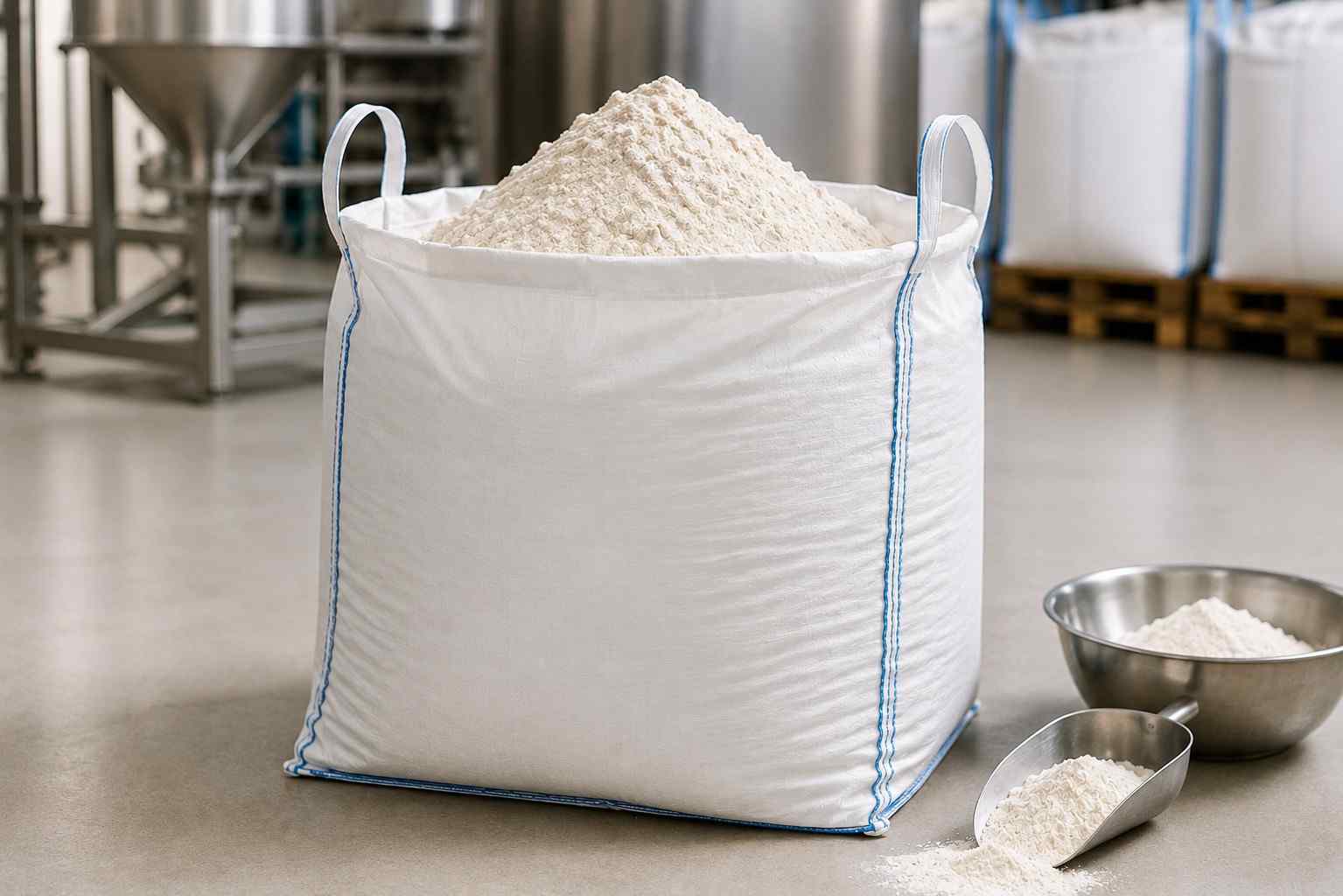
Flour mixes require packaging that protects product integrity at every stage, from milling through to distribution and retail display. These products are highly sensitive to moisture, prone to shifting through weak seams, and easily affected by odours from surrounding storage conditions.
A food-grade open-mouth multiwall sack with a block bottom base is engineered to address these risks, making it a preferred packaging format for flour, baking mixes, and other dry food powders throughout Australia.
This blog examines the construction of these sacks, the operational advantages of the block bottom design for flour packaging, the key criteria to assess when selecting a supplier, and how Wales Industries approaches food-grade manufacturing.
Read More :- https://walesindustries.com.au/blog/fibc-bags/food-grade-fibc-bags-for-pecans-packaging-ultimate-guide/
Each term in the product name reflects a specific design and compliance feature. “Open mouth” describes the filling method. Unlike a valve bag, which has a small opening for filling, an open mouth sack has its entire top left open during production. Product is poured or pumped in, and the top is then closed by sewing, gluing, or heat sealing. This construction supports the fast, high-volume filling required for flour mixes.
“Multiwall” refers to the sack’s layered construction. Rather than a single sheet of paper, the sack is built from several layers of kraft paper, often combined with a plastic film or coating between layers. Each layer contributes additional strength, and together they provide significantly better resistance to punctures, tears, and handling stress during transport than a single-ply bag.
“Food grade” is the requirement that matters most to a flour mix producer. It confirms the sack is manufactured, handled, and stored under conditions that meet recognized food safety requirements, using materials approved for direct contact with edible products.
Here are some of the key features of a well-specified sack:
Picture a standard pillow-shaped sack lying on its side versus a block bottom sack standing upright like a small box. That difference sounds minor, but on a production floor and in a warehouse, it changes quite a lot. Here are some of the operational advantages of the block bottom design for flour mixes:
A flat base means pallets of filled sacks sit square and stable. There’s less rocking, less risk of a stack shifting mid-transport, and fewer bags splitting open because of uneven pressure from above.
Automated filling lines rely on the bag holding its shape while product drops in. A block bottom sack holds its form under the filling nozzle, which keeps the line moving without constant adjustment.
Retail flour mixes often sit upright in a supermarket aisle or bakery supply store. A bag that stands on its own, rather than slumping sideways, is easier to read, easier to grab, and simply looks more finished.
Flour is dense and heavy in bulk. An even, flat base distributes that weight across the whole bottom seam rather than concentrating it at one corner or fold, which lowers the risk of a seam giving way.
Flour is also a fine powder, and fine powders find their way out through any weak point in a bag. A properly stitched or heat-sealed block bottom closure, paired with a moisture-resistant inner layer, keeps the product contained and keeps outside dust, insects, and moisture out.
Not every food-grade bag suits every product, and flour mixes have their own quirks compared to, say, granulated sugar or whole grains. Before signing off on a supplier, it’s worth working through a short checklist.
That last point is where a lot of buyers get caught out. A supplier can print “food grade” on a spec sheet without much behind it. Asking for documentation upfront, before the first order lands, is the simplest way to avoid a packaging problem later.
Choosing who makes your bags matters as much as choosing the bag design. Wales Industries has supplied bulk packaging to Australian businesses since 2016, and its multi-wall paper sacks are used across flour, grain, sugar, and other dry applications by more than 500 clients nationwide.
The company backs its food-grade range with three things worth checking for in any supplier:
Beyond certification, Wales Industries offers these sacks in a range of sizes, thicknesses, and finishes, with printing options for branding, batch numbers, and ingredient information. Warehouses positioned across Australia support faster turnaround, which matters for flour producers running tight production schedules and unable to wait weeks on imported stock.
A food-grade open-mouth multiwall sack with a block bottom base is a practical, well-tested choice for packaging flour mixes. It stands upright on its own, fills cleanly on automated lines, stacks safely on pallets, and keeps moisture and contamination out through storage and transport.
When comparing suppliers, don’t stop at price. Ask about food-grade certifications, traceability records, and evidence of consistent testing. Those three things are what separate a bag that simply claims to be food safe from one that’s actually built and proven to be.
To talk through the right food-grade sack for your flour mix packaging, contact Wales Industries on 1300 786 560 or visit walesindustries.com.au.
Australia
 中国 (China)