1300 786 560
 Australia
Australia
Dry bulk materials move through supply chains in large volumes every day, and the packaging has to protect them at each stage. Flexible intermediate bulk containers, known as FIBCs or bulk bags, are a common choice for this work. When buyers specify them, one question keeps coming up: does the bag need a liner?
The answer matters more than it first appears. A wrong decision can lead to product loss, moisture damage, or a rejected delivery. Powders and granules also behave differently, so a setup that suits one may not suit the other.
This guide explains what a polyethylene (PE) liner does and when it makes sense for each type of material. It also lists the questions worth asking a supplier before you place an order.
FIBC stands for Flexible Intermediate Bulk Container. Most people just say bulk bag or big bag. One bag can replace dozens of small sacks.
Wales Industries describes its standard FIBC as a four-loop bag. It comes in many sizes, but generally in a U-shape or a circular shape. The company says it offers better storage and transportation than traditional woven sacks.
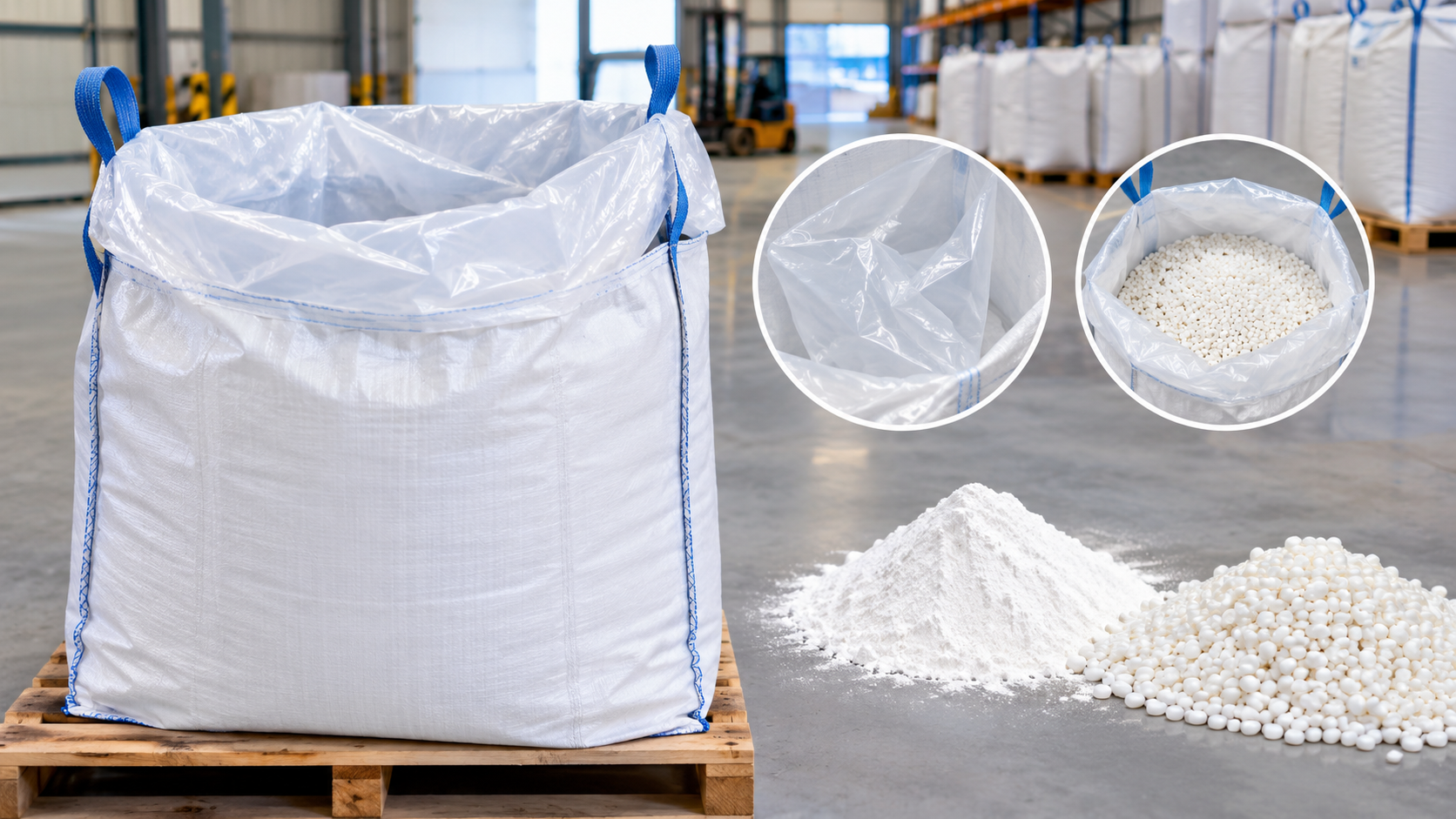
PE stands for polyethylene, a type of plastic film. A PE liner is a bag made from that film. It sits inside the outer woven bag. The two parts do different jobs. The woven fabric carries the weight. The liner holds the product and acts as a barrier.
Because the liner is a separate item from the bag, you can choose each one to suit your product. Wales Industries lists bulk bag liners and polyethylene (PE) film in its range, and it supplies the film both printed and unprinted. That makes it easy to ask about the bag and the liner together.
Woven fabric is strong, but it is not a sealed container. A liner can help in several ways:
Not every product needs all of this. That is why the decision comes down to the material itself.
| Factor | Powders | Granules |
| Particle size | Fine, often dusty | Larger, flow freely |
| Risk of leaking through the weave | Higher | Lower |
| Moisture sensitivity | Often high, can clump | Depends on the product |
| Cleanliness needs | Often high | Depends on the end use |
| Is a liner worth considering? | Often yes | Sometimes, case by case |
Powders are the most common reason people add a liner. Fine particles are light, dusty, and quick to find a gap. They can also pick up moisture and clump.
Ask yourself these questions:
If you answer yes to any of these, a PE liner deserves serious thought.
Granules are larger and flow more freely. They are less likely to sift through the fabric. For some coarse materials used in rough settings, a plain bulk bag may be enough.
A liner still makes sense in some cases:
Suppliers commonly offer two basic styles. A loose liner is a simple film bag placed inside the outer bag. A form-fit liner is shaped to match the bag, so it sits flat against the walls. Which one suits you depends on the product and on how you fill and empty the bag. Your supplier can advise.
Whichever style you choose, the liner should match the size and shape of the bag it goes into. A poor fit can cause wrinkles or folds inside the bag, which makes filling and emptying harder.
This is why it helps to discuss the bag and the liner together. Wales Industries offers customised options for size, style and function, and one customer noted that Wales had a sample made and tested before supply, which is a useful way to check the fit.
Wales Industries Australia has been an FIBC bulk bag manufacturer and supply chain solutions provider since 2016. It looks after the business for Australia and New Zealand and delivers nationwide. Bulk bag liners sit in its product list next to its FIBC bulk bags, so you can ask about both in one conversation.
Wales designs, makes and supplies FIBCs for industries that often handle powders and granules:
The range also covers bags by load size, from 10kg to 40kg and from 500kg to 1.5 ton. Wales offers customised options for size, style and function, and says it works with customers to make sure they receive the right products for the job.
Two related products are worth knowing about. Container liners can turn a 20- or 40-foot container into a bulk transport system within ten minutes, according to Wales. The company also supplies polyethylene (PE) film, printed and unprinted.
Testing matters too. One customer, Matthew from Geelong, Victoria, said that out of three companies that sent the same bag specification, only Wales had a sample made and tested.
The wider Wales group regularly supplies products to 20 countries. It has production and R&D sites in 6 locations across Asia and operates 4 sales and service locations in the Asia-Pacific region.
Have these details ready when you talk to a supplier:
A PE liner adds a barrier inside a woven bulk bag. Powders often need one because they are fine, dusty, and sensitive to moisture. Granules may or may not, depending on how clean and dry they need to stay. The best way to decide is to look at your product, your storage, and your customer’s expectations.
If you are not sure, talk to the Wales team. Tell them what you are packing and how it will travel, and they can help you choose the right bag and liner.
Australia
 中国 (China)