1300 786 560
 Australia
Australia
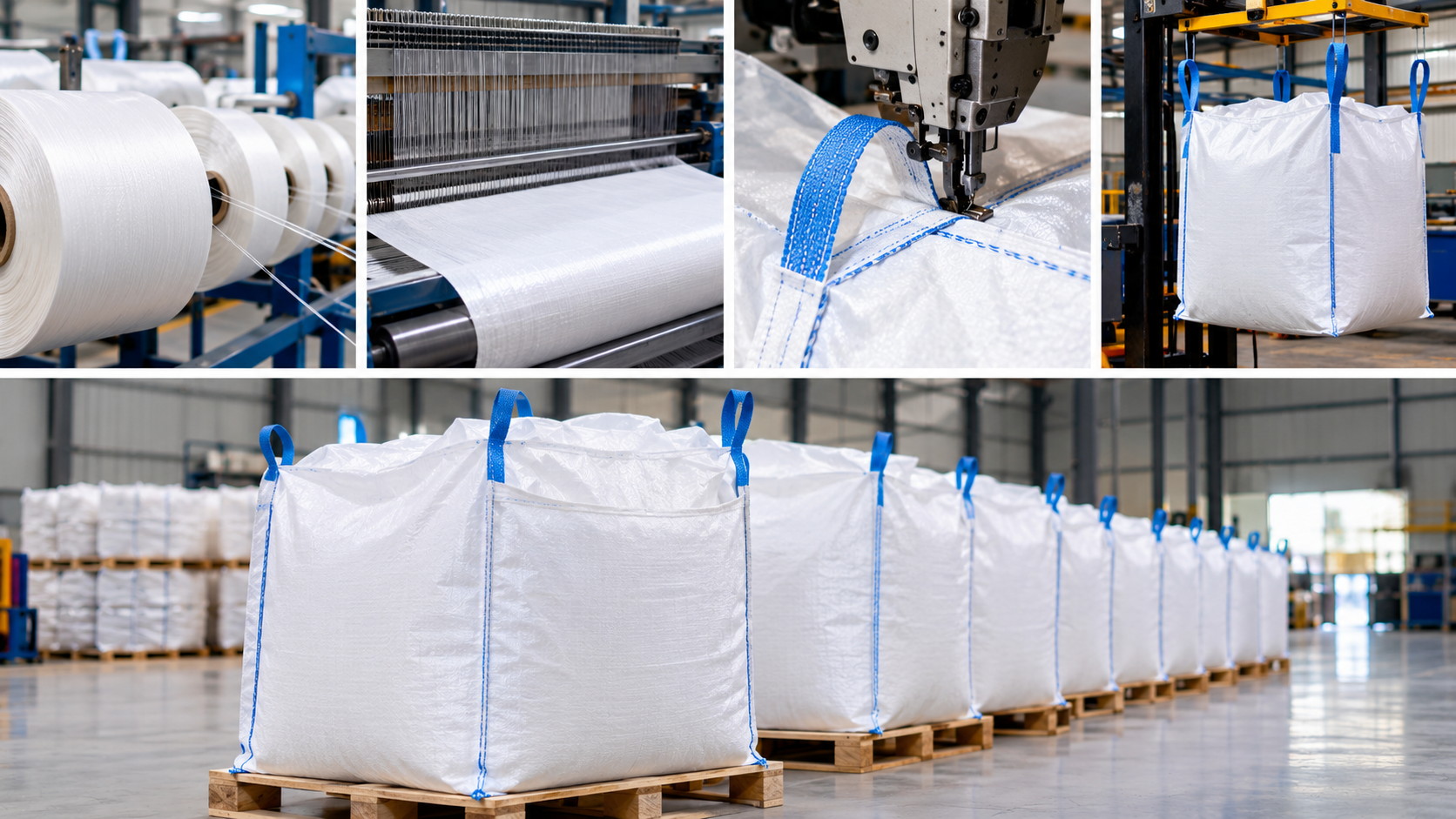
Dry bulk goods move in huge amounts every day. Grain leaves the farm. Cement heads to building sites. Fertiliser, minerals and chemicals travel from plant to plant. A lot of this cargo rides in FIBCs, short for Flexible Intermediate Bulk Containers. Most people just call them bulk bags or big bags.
A bulk bag looks simple, but plenty goes into one. Someone has to pick the fabric, decide how the bag will be lifted, choose how it fills and empties, and prove it can handle the load.
This post walks through those stages, with Wales Industries, an Australian FIBC manufacturer, as the example.
An FIBC is a flexible container built to store and move dry bulk materials. Wales Industries makes its bulk bags from high-strength woven polypropylene, which gives them load stability and durability while they are filled, lifted, and emptied. Typical users work in construction, agriculture, food processing, and chemical handling.
Bulk bags come in many sizes and designs, and they work with automated systems. Compared with traditional woven sacks, 4-loop bags give better load stability, easier forklift handling, and better use of space in storage and transit.
What goes inside varies a lot. Common contents include grain, flour, seeds, feed, fertiliser, cement, gravel, chemicals, milk powder and pet food.
The stages below cover the main choices that shape a finished bag.
The cloth is the first choice. For 4-loop bags and PP woven sacks, Wales Industries uses UV-stabilised woven polypropylene. For 1- and 2-loop bags, the fabric can be coated or uncoated. Water resistance comes from lamination or a polyethylene liner.
The build style decides how a bag is lifted and how well it holds its shape. Wales Industries offers five FIBC types:
Next comes how the bag fills and empties. Tops can be open, duffle, or a filling spout. Bottoms can be flat or have a discharge spout. The 4-loop bags come in six combinations, such as an open top with a flat bottom, or a filling spout with a discharge spout.
Inner liners can be made from PE or aluminium. They add moisture protection, contamination control, and product safety. On 1 & 2 loop bags, the liner can be tubular or shaped.
Bags can be printed in 4 colours. Custom printing is used for product or brand identification.
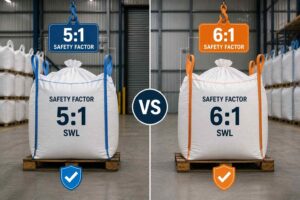
Every bag gets a Safe Working Load, or SWL. That is the most weight the bag is rated to carry in normal use. The safety factor is the ratio between the bag’s tested break strength and its SWL. A 1,000 kg bag at 5:1, for example, has been tested to 5,000 kg.
The 4-loop bags are rated like this:
Product tests are carried out in an in-house laboratory. They cover the yarn, the fabric, the coating, and how the whole bag behaves when it is lifted, dropped, toppled, or stacked. The full list:
Wales Industries takes the steps needed to meet all mandatory legal requirements and industry standards. These include:
The Wales group has production and R&D sites in 6 locations across Asia, plus 4 sales and service locations in the Asia-Pacific region. Wales Industries Australia looks after Australia and New Zealand. The wider network spans Australia, China, India and New Zealand, and the group supplies products to 20 countries.
Yes, a bag size can be customized. Size, fabric type, lifting loop setup, liners, coatings, discharge spouts, baffles, UN certification and printing can all be tailored to the job.
Yes, bags are kept in stock. Over 50 types of FIBCs are in stock, with same-day shipping from warehouses across Australia.
Wales Industries has been making FIBC bulk bags in Australia since 2016. More than 500 customers have been served, and 1.5 million products are supplied each year.
Making an FIBC bulk bag comes down to seven decisions: the fabric, the construction, the top and bottom, the liner, the printing, the load rating and the testing. Each one changes how the bag performs with your product, your load, and your handling equipment.
Wales Industries builds around those choices and backs them with in-house tests and recognised standards. If you want a bag specified for your material, weight, and filling setup, get in touch with the Wales Industries team through the enquiry page at walesindustries.com.au.
Australia
 中国 (China)