1300 786 560
 Australia
Australia
Australia
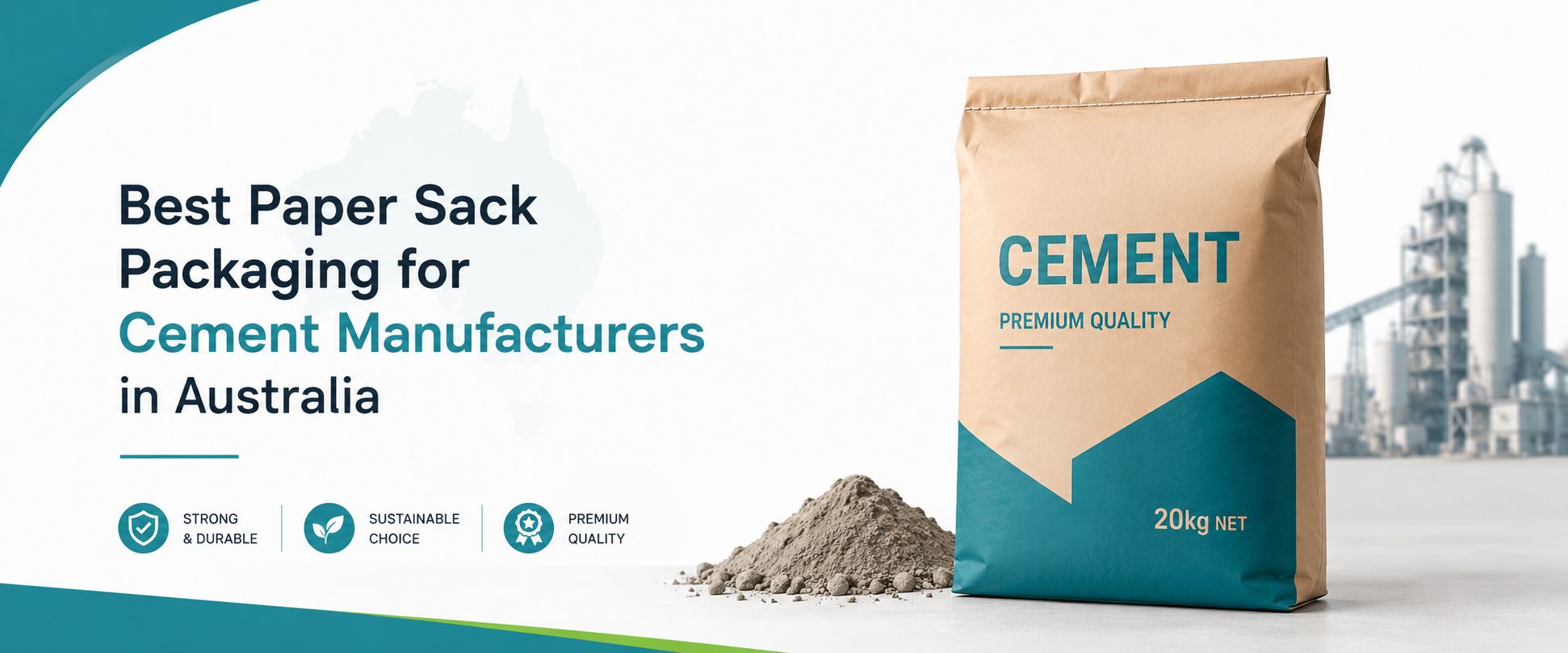
Cement is one of the most widely used building materials in Australia. It moves through hardware stores, construction sites, and concrete batching plants every day. But before any of that happens, it has to survive packing, stacking, freight, and storage without losing quality.
That’s where packaging becomes just as important as the product itself. Cement is sensitive to moisture. A damp bag, a torn seam, or a weak base can turn a good batch into wasted stock. For manufacturers, choosing the right paper sack isn’t a small decision. It affects product quality, handling costs, and how the bag looks on a store shelf or pallet.
This guide looks at what makes a paper sack suitable for cement, and what to check for when sourcing one in Australia.
Paper sacks used for cement are usually multi-wall paper bags. They’re built for several layers of kraft paper, sometimes with a polyethylene liner or lamination added on top.
Each layer does a different job. One might add strength. Another might block moisture. Together, they give the bag the durability cement needs during loading, transport, and storage.
Most multi-wall paper bags for cement have a flat, block-shaped base. They let the bag stand upright on its own, which helps with pallet stability and shelf presentation. It’s a small design detail, but it makes a real difference once bags are stacked several layers high in a warehouse or on a truck.
The most important features when choosing paper sack suppliers for cement packaging are:
Cement does not forgive moisture. Even a small amount of dampness can cause clumping and drop the product down a quality grade. This is one of the biggest risks in cement packaging, and it’s why the construction of the bag matters more than people often expect.
A plain paper bag without a liner is the weaker option here. Add a polyethylene liner or lamination, and the bag can hold up well against water exposure during transport or short-term outdoor storage.
This is why many cement manufacturers specify a lined or laminated multi-wall paper bag rather than a basic unlined version, especially if the product will sit in a yard or travel any real distance before use.
Related Blog: Paper Sacks vs Plastic Bags for Cement and Building Materials: A Full Comparison
Paper sacks are a long-standing choice for cement because they balance strength, presentation, and practicality.
A few reasons come up again and again:
Some cement manufacturers weigh up paper sacks against PP woven (plastic) sacks. Both are common in the building materials industry, and the right choice depends on how the bags will actually be used.
Paper sacks tend to suit cement that will be stacked neatly in a warehouse or presented on a retail shelf, since the flat base and printable surface support that kind of handling. Plastic woven sacks, on the other hand, are often chosen when bags need to withstand rougher site conditions or outdoor storage without cover, since the woven fabric resists tearing and holds up well in sun exposure.
Neither type is a universal answer. It comes down to your filling line, storage setup, and how the product travels from your facility to the job site.
Not every paper sack supplier builds bags to the same standard. Before committing to a supplier, it helps to check:
Wales Industries has been manufacturing FIBC bulk bags and paper sack packaging in Australia since 2016. The company supplies multi-wall paper bags built for cement, along with concrete materials, chemicals, resins, and other powdered or granular products.
Choosing the right paper sack for cement comes down to a few core factors: moisture protection, stacking stability, filling line compatibility, and consistent quality testing.
A well-built multi-wall paper bag protects product quality from the factory floor through to the job site, while also giving your brand a clean, professional look on the shelf or pallet.
If you’re a cement manufacturer in Australia looking to review your packaging options, Wales Industries can help you find the right paper sack solution for your production line and delivery needs.
Also Read: Paper Sacks for Baking Mixes & Bakery Goods: Wales Industries Leads the Way
Australia
 中国 (China)